before a state
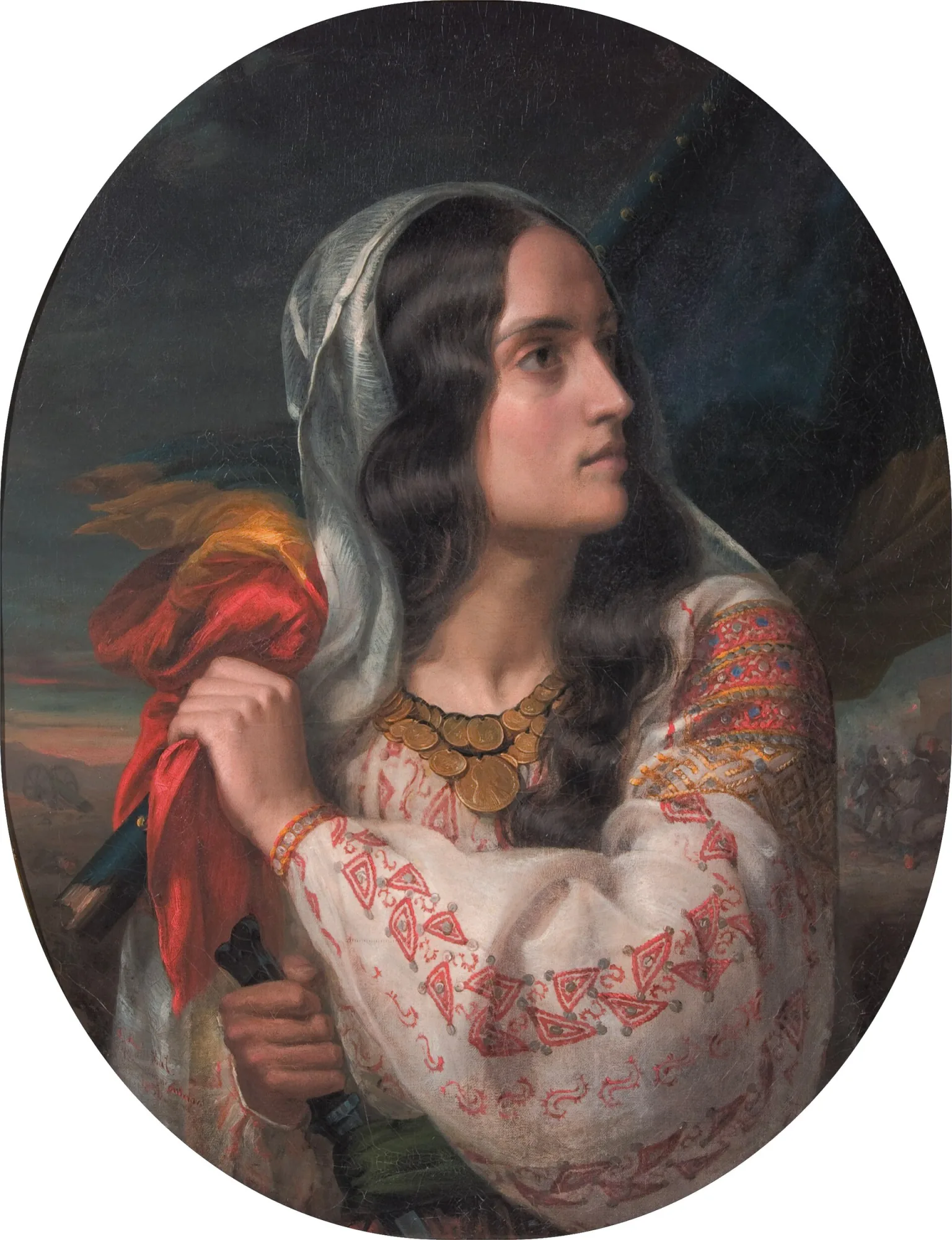
Constantin Daniel Rosenthal · c. 1850
Revolution gets
a body.
La révolution prend corps.
România revoluționară gives the 1848 idea a face: a woman in Romanian dress, carrying the colours of political renewal. It is one of the most direct images in the country’s nineteenth-century memory.
România revoluționară donne un visage à l’idée de 1848 : une femme en costume roumain, portant les couleurs du renouveau politique. C’est l’une des images les plus directes de la mémoire roumaine du XIXe siècle.
Rosenthal was born to a Jewish family in Pest, studied in Vienna and Paris, and joined the Wallachian revolutionaries around C. A. Rosetti. He did not paint a census of the nation. He painted a proposition: that a people divided between empires could imagine itself as a political subject. Arrested by Austrian authorities while carrying messages for the exiles, he died in prison in 1851. The painting survives as an act of allegiance rather than a neutral illustration.
Rosenthal est né dans une famille juive de Pest, a étudié à Vienne et à Paris, et a rejoint les révolutionnaires valaches autour de C. A. Rosetti. Il n’a pas peint un recensement de la nation. Il a peint une proposition : un peuple partagé entre des empires pouvait se concevoir comme un sujet politique. Arrêté par les autorités autrichiennes alors qu’il portait des messages pour les exilés, il est mort en prison en 1851. La peinture subsiste comme un acte d’allégeance plutôt que comme une illustration neutre.
Paris and Bucharest
Learning
the craft.
Apprendre le métier.
Theodor Aman was among the generation that made a route of the journey west. He studied in Paris with Michel Martin Drolling and François-Édouard Picot, worked in Rome, and returned to Bucharest with a conviction that painting required institutions as much as talent. In 1864, with Gheorghe Tattarescu and the support of Alexandru Ioan Cuza, he helped found the National School of Fine Arts. It offered a studio, a discipline and a public exhibition culture to artists who had previously had almost none.
Theodor Aman fut l’un de ceux qui firent du voyage vers l’Occident une voie suivie. Il étudia à Paris auprès de Michel Martin Drolling et de François-Édouard Picot, travailla à Rome, et revint à Bucarest avec la conviction que la peinture exigeait des institutions autant que du talent. En 1864, avec Gheorghe Tattarescu et sous l’appui d’Alexandru Ioan Cuza, il contribua à fonder l’École nationale des beaux-arts. Elle offrit aux artistes, qui n’en avaient auparavant presque pas, un atelier, une discipline et une culture de l’exposition publique.
Aman’s historical canvases gave political memory a scene, but the school may be his more lasting work. A nation was building museums, theatres, papers and classrooms at the same time as it was building ministries. The studio joined that public infrastructure. Art could now be taught, debated, bought, criticised and seen by people who were not members of a court.
Les toiles historiques d’Aman donnèrent à la mémoire politique une scène, mais l’école est peut-être son œuvre la plus durable. Une nation construisait des musées, des théâtres, des journaux et des salles de classe au même moment où elle construisait des ministères. L’atelier rejoignit cet appareillage public. L’art pouvait désormais être enseigné, débattu, acheté, critiqué et vu par des gens qui n’appartenaient à aucune cour.
Nicolae Grigorescu · Paris & Barbizon
The country
enters the
light.
Le pays entre dans la lumière.
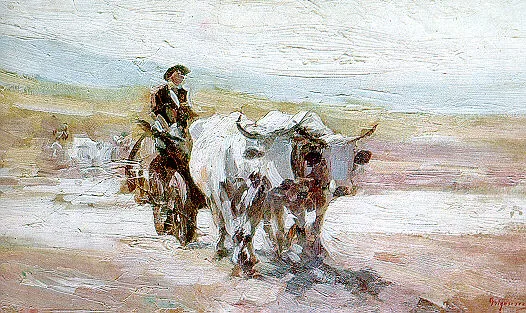
Grigorescu reached Paris in 1861 on a state scholarship, then found a more decisive education outside it: Barbizon, near the Forest of Fontainebleau. There, the generation around Corot, Rousseau, Millet and Courbet had made landscape and ordinary rural life serious subjects for painting. Direct observation mattered more than heroic finish; weather, soil and work carried their own dignity.
Grigorescu arriva à Paris en 1861 avec une bourse d’État, puis trouva hors de Paris une formation plus décisive : Barbizon, près de la forêt de Fontainebleau. Là, la génération de Corot, Rousseau, Millet et Courbet avait fait du paysage et de la vie rurale ordinaire des sujets sérieux pour la peinture. L’observation directe comptait davantage que la finition héroïque ; le temps, le sol et le travail portaient leur propre dignité.
He brought that permission home. His roads, shepherds, ox-carts and women at the river did not turn Romanian peasants into French ones. They put Romanian life inside an international modern vocabulary of light and attention. The National Museum of Art of Romania traces the Barbizon and Courbet–Corot principles in his work: the practice of looking closely could give a small nation’s landscape a European seriousness without draining away its particular weather.
Il rapporta cette permission au pays. Ses routes, ses bergers, ses charrettes à bœufs et ses femmes au bord de l’eau ne transformèrent pas les paysans roumains en paysans français. Ils placèrent la vie roumaine dans un vocabulaire moderne et international de lumière et d’attention. Le Musée national d’art de Roumanie retrouve dans son œuvre les principes de Barbizon et de Courbet–Corot : la pratique d’un regard attentif pouvait donner au paysage d’un petit pays une gravité européenne sans lui ôter son climat propre.
Vasile Alecsandri · the folk voice and the stage
A language
needs its audience.
Une langue a besoin de son public.
Alecsandri moved through the early public culture with unusual range: poet, playwright, collector of folk poetry, minister and diplomat. His collections gave print form to songs and tales that had travelled by voice; his comedies and historical dramas brought a Romanian-speaking audience into the theatre. He served the cause of union abroad, including in Paris, because cultural confidence and political recognition were intertwined.
Alecsandri se déploya dans la vie publique naissante sous des formes multiples : poète, dramaturge, collecteur de poésie populaire, ministre et diplomate. Ses collections donnèrent forme imprimée à des chants et à des récits qui avaient circulé de bouche en bouche ; ses comédies et ses drames historiques firent entrer un public roumanophone dans le théâtre. Il servit la cause de l’union à l’étranger, notamment à Paris, parce que la confiance culturelle et la reconnaissance politique se tenaient étroitement liées.
The folk tradition in these pages is neither raw material nor museum piece. It becomes a reservoir from which writers, painters and composers took rhythm, image and authority. The modern nation needed a public language; its public language needed to know that it had ancestors.
La tradition populaire qui traverse ces pages n’est ni une matière première ni une pièce de musée. Elle devient un réservoir d’où les écrivains, les peintres et les compositeurs tirèrent le rythme, l’image et l’autorité. La nation moderne avait besoin d’une langue publique ; cette langue publique avait besoin de savoir qu’elle avait des ancêtres.
Vienna · Berlin · Iași
Romanticism
in a German key.
Mihai Eminescu est nourri de Goethe et de Lamartine, de Lessing et de Hugo.
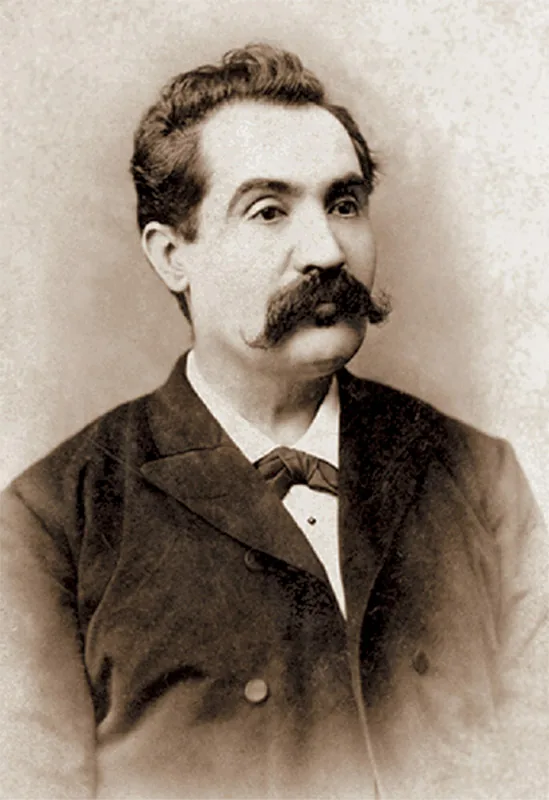
Mihai Eminescu’s imagination was formed along another western road. He studied in Vienna from 1869 to 1872 and in Berlin from 1872 to 1874, reading Kant and Schopenhauer in German and absorbing a Romantic vocabulary in which folk myth, history and metaphysical longing could share a page. The language of his poetry remained Romanian — archaic, supple, saturated with folk cadence — yet its philosophical weather had passed through German universities.
L’imagination de Mihai Eminescu s’est formée le long d’une autre route occidentale. Il étudia à Vienne de 1869 à 1872 et à Berlin de 1872 à 1874, lisant Kant et Schopenhauer en allemand et absorbant un vocabulaire romantique dans lequel le mythe populaire, l’histoire et l’aspiration métaphysique pouvaient partager une même page. La langue de sa poésie demeura roumaine — archaïque, souple, saturée de cadence populaire — mais son climat philosophique était passé par les universités allemandes.
Luceafărul, published in 1883, begins from a Romanian folk tale and reaches toward the cold scale of cosmology. That movement is one reason the poem still feels larger than an illustration of a national legend. It carries an argument about genius, desire and distance into a literary language being made before the reader’s eyes.
Luceafărul, publié en 1883, part d’un conte populaire roumain et monte vers la gamme froide de la cosmologie. Ce mouvement est l’une des raisons pour lesquelles le poème reste plus grand qu’une illustration d’une légende nationale. Il porte un argument sur le génie, le désir et la distance dans une langue littéraire qui se fait sous les yeux du lecteur.
German influence here should be named precisely. It included scholarly training, historicist thought and Romantic forms; it did not erase the French political vocabulary that had helped the 1848 generation make a country imaginable. Romanian modern culture could hold both currents at once.
L’influence allemande doit ici être nommée avec précision. Elle comprenait une formation savante, une pensée historiciste et des formes romantiques ; elle n’effaçait pas le vocabulaire politique français qui avait aidé la génération de 1848 à rendre un pays concevable. La culture roumaine moderne pouvait porter les deux courants à la fois.
The argument leaves the salon
L’argument quitte le salon.
Ink made
a public.
L’encre fit un public.
Poems and paintings gained force when journals, printers and readers could carry them beyond a room.
Les poèmes et les peintures prirent de la force lorsque les journaux, les imprimeurs et les lecteurs purent les porter au-delà d’une pièce.
1829
Curierul Românesc
« Le Courrier roumain »
Ion Heliade Rădulescu’s newspaper helped establish the periodical as a tool for a Romanian-speaking public.
Le journal d’Ion Heliade Rădulescu aida à faire du périodique un outil au service d’un public roumanophone.
1838
Gazeta de Transilvania
« La Gazette de Transylvanie »
George Bariț’s Brașov paper linked Transylvanian political claims to a wider Romanian reading public.
Le journal de George Bariț à Brașov relia les revendications politiques transylviennes à un plus large public roumain lecteur.
1867
Convorbiri literare
« Causeries littéraires »
Junimea’s journal made criticism a civic practice and opened its pages to Eminescu, Creangă and Slavici.
Le journal de la Junimea fit de la critique une pratique civique et ouvrit ses pages à Eminescu, Creangă et Slavici.
1877
Timpul
« Le Temps »
Eminescu’s political journalism brought the poet into the daily pressure of party, empire and public opinion.
Le journalisme politique d’Eminescu fit entrer le poète dans la pression quotidienne du parti, de l’empire et de l’opinion publique.
Titu Maiorescu — philosopher, critic, Conservative politician and a founder of Junimea — had studied in Berlin and earned his doctorate at Giessen. His German intellectual formation sharpened a Romanian argument about institutions: borrowed forms, he warned, could turn hollow when social life had not grown into them. Whether one accepts that judgement or not, the journal made a crucial thing possible: a culture able to criticise its own haste in public. Iași was inside this world too: from 1855 the city published Korot ha-‘itim, the first Yiddish newspaper in Romania, and in 1859 a bilingual Gazeta Româno-Evreiască that campaigned for emancipation and for reform of the schools.
Titu Maiorescu — philosophe, critique, homme politique conservateur et l’un des fondateurs de la Junimea — avait étudié à Berlin et soutenu sa thèse à Giessen. Sa formation intellectuelle allemande affûta une argumentation roumaine sur les institutions : les formes empruntées, avertissait-il, pouvaient devenir creuses lorsque la vie sociale ne s’y était pas développée. Qu’on accepte ce jugement ou non, le journal rendit possible une chose décisive : une culture capable de critiquer en public sa propre précipitation. Iași appartenait à ce monde également : dès 1855 la ville publiait Korot ha-‘itim, le premier journal yiddish de Roumanie, et en 1859 un Gazeta Româno-Evreiască bilingue qui militait pour l’émancipation et pour la réforme des écoles.
Writing was political here in the full sense. It could summon union, argue language, dispute the shape of the state, defend Transylvanian Romanians, question an imported institution, or imagine a future that did not yet have a ministry to enforce it. The newspaper transformed ideas into a daily condition.
L’écriture était ici politique au sens plein. Elle pouvait appeler l’union, discuter la langue, contester la forme de l’État, défendre les Roumains de Transylvanie, interroger une institution importée, ou imaginer un avenir qui n’avait pas encore de ministère pour l’imposer. Le journal transformait les idées en condition quotidienne.
A circuit of forms
West to learn.
Home to make.
L’Ouest pour apprendre. Le pays pour créer.
By the turn of the century, a reader could find a newspaper, a critic, a theatre, a salon, a concert hall and a school of art in Romanian. George Enescu’s formation made the circuit audible: Vienna at seven, Paris at fourteen, then a Romanian musical voice ready for European stages. No single capital owns that achievement. Yet the roads to Paris and the German-speaking universities gave Romanian artists the techniques, arguments and professional networks with which to make a public culture at home.
Au tournant du siècle, un lecteur pouvait trouver en roumain un journal, un critique, un théâtre, un salon, une salle de concert et une école d’art. La formation de George Enescu rendit ce parcours audible : Vienne à sept ans, Paris à quatorze ans, puis une voix musicale roumaine prête pour les scènes européennes. Aucune capitale ne revendique cette réussite. Pourtant les routes de Paris et des universités germanophones donnèrent aux artistes roumains les techniques, les arguments et les réseaux professionnels nécessaires pour faire une vie publique chez eux.
The visible country
Art did not decorate freedom.
It built a public culture.
L’art ne décore pas la liberté. Il construit une vie publique.